
Sampling: Cost, Timeline and What a Sample Can't Tell You
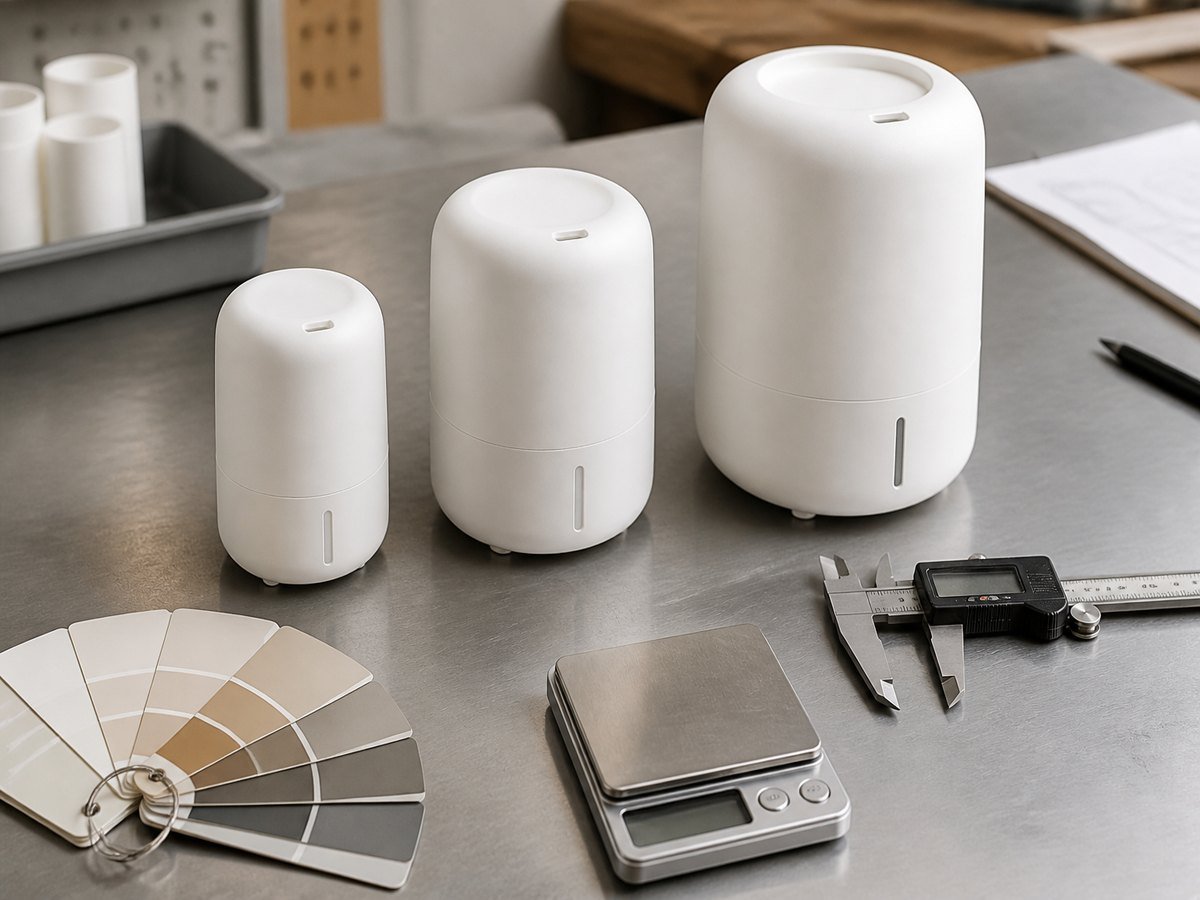
Conclusion first: you are buying engineering time, not a cheap unit
A sample fee is not a deposit on a product and it is not usually refundable against the bulk order. It pays for the hours a factory spends turning a specification into a unit that exists: setting up a short run on an existing line, pulling components that may not be in stock, printing or painting a colour that is not standard, and packing it the way you intend to sell it. That is why the fee looks high against the unit price and why it varies so much between factories. The useful question is not "how much is a sample" but "what is included in this fee, and what will I still not know when it arrives".
What the sample fee is made of
Most quotations break down along the same lines, even when the factory presents a single number.
| Cost line | What it covers | Why it varies |
|---|---|---|
| Materials | Components at small-quantity pricing, not bulk pricing | A one-off purchase of a PCB or transducer costs more per unit than a production order |
| Line time | A short run scheduled around production | Taking a line offline for a handful of units has a fixed cost regardless of quantity |
| Colour or finish | Paint, resin colour or printing setup | A standard colour needs no setup; a custom match does |
| Packaging | Box, insert, manual and labels | A plain export carton is cheap; a printed gift box needs a print run |
| Engineering | Reviewing the spec, checking the build, documenting deviations | Depends on whether the unit is a catalogue model or a modified one |
| Freight | Courier to your door, duties and clearance | Usually quoted separately and paid by the buyer |
Two things are worth asking before you pay. First, whether the fee is credited against the first bulk order — some factories do this, many do not, and either answer is fine as long as it is stated. Second, whether the quote is for one sample or a set: a functional sample plus a packaged sample plus a colour panel is three different things and often three different prices.
Why the timeline is a range and not a date
The site quotes sampling at roughly five to fifteen working days from confirmation of the sample specification and payment of the sample fee. That range is wide because four independent clocks run at once.
- Component availability. A catalogue model may be built from stock in days. A model with a different PCB revision, a different transducer frequency or a specific adapter may wait on a component order.
- Mould and fixture availability. The mould may exist, but it may be mounted on a machine running another job. Scheduling a short run between production orders is the usual cause of a week's slippage.
- Cosmetic work. A standard colour is a resin choice. A matched colour needs a sample panel, your approval, and sometimes a small batch of moulded parts before the unit is assembled.
- Packaging. A plain carton can be folded in a day. A printed box needs artwork approval, a print run and a die.
None of this is a reason to accept an open-ended promise. Ask for the sample date in working days from payment, ask which of the four clocks is the critical path, and ask what happens if a component slips. A factory that can name the constraint is managing it; a factory that says "about two weeks" is guessing.
What a sample can tell you
A single unit, handled properly, answers a surprising number of questions.
- Whether the unit matches the specification sheet. Tank capacity, mist output, runtime, noise at the setting you intend to sell, and the actual power draw at the rated voltage.
- Build quality you can feel. Seam alignment, parting lines, the fit of the tank in the base, whether the lid seats with a definite stop or rattles.
- Whether the controls make sense. Button travel, light behaviour, whether the unit remembers settings after a power cut, whether sleep mode is reachable without reading the manual.
- Packaging fit. Whether the insert actually holds the unit, whether the manual is visible when the box opens, whether the carton survives being dropped from waist height.
- Labelling. Whether the rating label is legible, correctly placed, and carries the right voltage and plug for the market.
What a sample cannot tell you
This is the part buyers over-read. A sample is one unit, usually built with more attention than a production unit, and often built from components selected for the sample rather than drawn at random from the line.
- Production consistency. One good unit says nothing about the tenth thousand. Only the process — incoming inspection, fixturing, aging, AQL — speaks to that.
- Field life. A transducer that runs for a week on a desk is not evidence of a season of nightly use. Scale and mineral content in real water are the variables a sample test rarely reproduces.
- Transit survival. A courier box is not an ocean container. Carton strength and pallet configuration are separate tests.
- Compliance. A sample that works is not a sample that passes. EMC, abnormal operation and component temperature rise are laboratory findings, not observation findings.
- Colour under retail light. A colour approved on a desk in daylight can read differently under warm shop lighting. Approve against a physical panel, not a screen.
- Defect rate. The only way to estimate that is to look at the factory's records or to inspect a production lot.
How to receive and inspect a sample
Treat the arrival as a test, not a delivery. Photograph the carton before opening it, then work through a fixed sequence so that two samples can be compared on the same terms.
- Record the carton condition, the label and the model number on the box against the one on the unit.
- Check the rating label first: voltage, frequency, power, model, and the importer details if the market requires them.
- Fill with water to the marked maximum, run a full cycle, and time it. Compare against the claimed runtime rather than against a feeling.
- Measure mist output if you can — a kitchen scale before and after a timed run gives you a number instead of an impression.
- Listen at the distance a customer would use it, at each speed setting, and note the room's background noise.
- Check for leaks at the seam and around the transducer after the unit has been standing full overnight, not immediately after a run.
- Open the packaging as a customer would, without a knife, and note whether anything is taped, folded or inserted in a way that would annoy a return.
- Log every deviation in writing, with photographs, and send the list to the factory before approving.
If you are sampling across several lines, run the same sequence on each. The product pages give the claimed figures per model, which is what your measurements should be compared against.
Approving the sample in writing
Approval is the point where the sample becomes a contract document. The private label guide applies the same approval step to logo, colour and packaging. Sign a page that names the sample, the date it was built, the deviations you accepted and the ones the factory agreed to fix. Keep a photograph set with the signature. Production is built to the approved sample, and a later change is a new order rather than a correction — which is fair to both sides only if the approved state was written down.
Ask where the approved sample will live during production. If it is kept on the line as a reference, the operator can compare. If it is in a cabinet in the sales office, it is a record rather than a control. The OEM and ODM page describes the approval stage in the wider order sequence, and the how-to-order page sets out what to send with the request so the sample is built to the right configuration the first time.
FAQ
Is the sample fee refundable?
Sometimes, as a credit against the first bulk order, and sometimes not at all. Both are normal. What matters is that the quotation states which one applies, and whether the credit expires. Get it in the quotation rather than in a message.
How many samples should I order?
Two or three is usually the practical minimum: one to test to destruction, one to keep as the reference, and one for a colleague or a retail buyer to handle. A single sample has to serve all three roles and ends up doing none of them well.
Can I skip sampling if I am buying a catalogue model?
You can shorten it, but not skip it. Even a catalogue model has to be checked in your voltage, your plug type and your packaging, and those are exactly the fields that change between markets. A branded pre-production sample is also the only way to approve print position and colour.
What if the sample arrives damaged?
Photograph the carton before opening and report it the same day. Damage in transit is a freight claim, not a product defect, and the two are handled differently. If the unit is damaged inside an intact carton, that is a packaging design problem and worth raising before the bulk order rather than after.
Filed under Guides. Back to all guides.