
Voltage, Plug Types and Energy Rules by Market
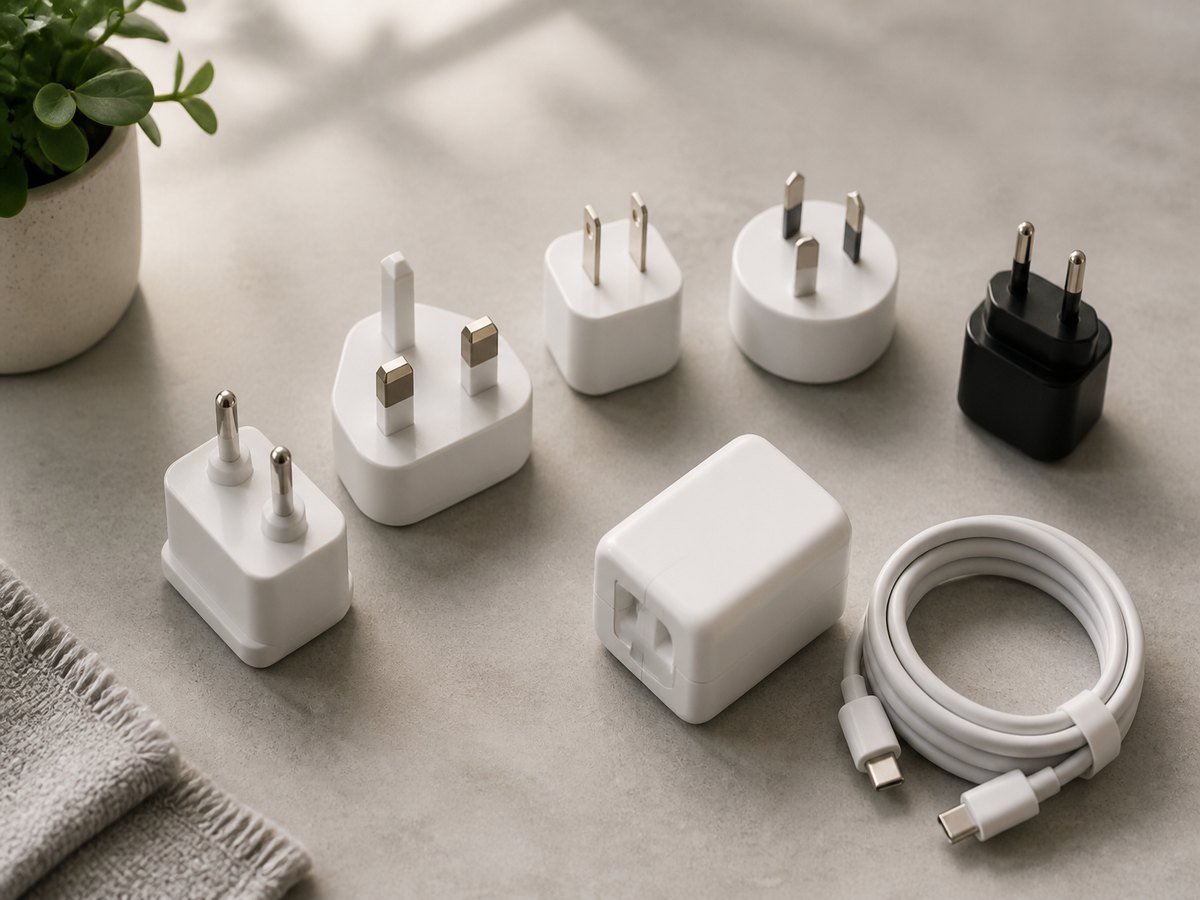
Conclusion first: the market decides the unit, not the other way round
Voltage, frequency, plug type and approval route are not specifications you adjust at the end of a project. They decide the transducer drive, the power board, the cord set, the carton artwork and the label — and getting them wrong is the most expensive mistake in a first export order, because a 120V unit cannot be fixed with an adapter. Pick the destination market before you pick the model, then count how many SKUs that decision creates. Most first-time buyers discover they need three, not one.
The four variables that travel together
A "voltage" is really four things: the nominal supply, the frequency, the physical plug, and the approval the market expects the combination to carry. Change one and you usually change the others.
- Voltage and frequency. 120V/60Hz in North America, 220–240V/50Hz across most of Europe, 100V in Japan with both 50Hz and 60Hz depending on region, 230–240V/50Hz in Australia. A heating element or a motor designed for one frequency does not simply run slower on the other; it runs at the wrong speed or draws the wrong current.
- Plug type. The moulded plug on the cord is part of the product in most markets and must match the socket standard, not just fit it.
- Approval route. The safety standard is often the same family — IEC 60335-2-98 for humidifiers, with the general appliance standard alongside it — but the scheme that tests and marks it differs by market. The certification guide by market sets out which scheme applies where.
- Language and labelling. Rating labels, manuals and safety warnings follow the market, and a manual in the wrong language is a defect in some jurisdictions rather than a cosmetic issue.
Market by market
United States: 120V, 60Hz, NEMA 5-15
North American units run on 120V/60Hz with a NEMA 5-15 plug for grounded appliances. The safety route buyers usually ask about is a listing to the applicable UL standard — UL 998 is the humidifier standard — issued by a nationally recognised testing laboratory, with ETL and UL both common. Separately, the electronics fall under FCC Part 15 Subpart B for unintentional radiators. These are two different questions: one is product safety, the other is electromagnetic emissions, and a unit can satisfy one and fail the other.
European Union: 220–240V, 50Hz, CEE 7/7
The EU runs 230V nominal at 50Hz, and most of the continent uses the CEE 7/7 plug, which fits both the Schuko and French sockets. The legal obligation is CE marking, which for a humidifier normally draws on the Low Voltage Directive, the EMC Directive and RoHS, with REACH obligations reaching the materials. CE is a declaration by the manufacturer or importer, backed by a technical file — not a certificate issued by a lab, although a test report is usually what supports it.
United Kingdom: 230V, 50Hz, BS 1363
The UK uses the same voltage and frequency as the EU but a different plug — BS 1363, with a fuse in the plug itself. That fuse is not decorative: the plug is part of the protective design, and a moulded BS 1363 plug with the correct fuse rating is a separate cord-set item from a Schuko cord. The UK also uses UKCA marking, and the acceptance of CE marking in Great Britain has changed more than once, so confirm the current position with your importer rather than relying on a 2021 answer.
Japan: 100V, 50 or 60Hz, Type A
Japan is the market most often got wrong. The supply is 100V, not 110V, and the frequency differs by region — 50Hz in the east, 60Hz in the west. The plug is the two-blade Type A, and the safety route runs through the Electrical Appliance and Material Safety Act, where humidifiers and aroma diffusers appear as named items. A unit built for the US and shipped to Japan is over-volted by roughly 20% and, if it uses a synchronous motor or a frequency-dependent drive, runs at the wrong speed as well.
Australia: 230–240V, 50Hz, AS/NZS 3112
Australia uses 230–240V at 50Hz with the AS/NZS 3112 plug, which has an insulated pin configuration that will not accept a European cord. The plug also has a stricter insertion geometry, so a "universal" adapter approach is not acceptable for retail sale.
| Market | Voltage / frequency | Plug | What the buyer normally asks for |
|---|---|---|---|
| United States | 120V / 60Hz | NEMA 5-15 | Listing to the applicable UL standard; FCC Part 15 for electronics |
| European Union | 230V / 50Hz | CEE 7/7 (Schuko/French) | CE marking with a technical file; LVD, EMC, RoHS |
| United Kingdom | 230V / 50Hz | BS 1363 (fused) | UKCA; confirm current CE acceptance with your importer |
| Japan | 100V / 50 or 60Hz | Type A | PSE under the Electrical Appliance and Material Safety Act |
| Australia | 230–240V / 50Hz | AS/NZS 3112 | Compliance with the Australian electrical safety regime |
Energy rules: what they usually cover
Energy requirements are separate from safety approval and are often administered by a different authority. In practice they fall into three groups: standby power limits for equipment left plugged in, energy labelling for categories that carry a label, and ecodesign requirements that set minimum performance. Whether a humidifier or diffuser falls inside any of these depends on the product category and the market, and the answer changes — a unit with a heating element, a unit with a network connection and a passive ultrasonic unit are not treated the same way. Ask your importer which instrument applies before you print the box, because the label artwork is the expensive part to redo.
Two practical consequences. First, standby consumption is a design decision, not a label decision: a unit with a permanently live display or a Wi-Fi module draws power in standby, and that may put it outside a limit that a mechanical-switch unit passes without effort. Second, a unit sold in several markets may need several label variants even when the hardware is identical, which is a carton SKU issue rather than an engineering one.
Reducing the SKU count
The way to keep five markets from becoming fifteen SKUs is to share the platform and vary only what must vary.
- One body, several harnesses. The housing and tank stay common; the power board, cord set and rating label change by market.
- Cord sets as separate part numbers. Moulding the plug onto the cord in the destination format is cheaper than adapters and is what retailers expect.
- Voltage-specific tooling for the label. Print the rating label per market rather than overprinting, so the voltage field cannot be wrong on a shipped carton.
- Frequency check for anything with a motor. Pumps and fans are the components that force a different BOM between 50Hz and 60Hz markets.
- One manual per language set. Plan the language set with the market list; adding a language later reopens the print minimum.
If you are shortlisting platforms and want to see which bodies are shared across lines, the product pages on this site list the configuration fields per model; the OEM and ODM page explains how much of the harness and housing can be varied without new tooling. If the product line itself is still open, the humidifier vs diffuser comparison starts one step earlier.
Common mistakes
- Assuming 220–240V covers the UK. The voltage matches; the plug, the fuse and the marking do not.
- Treating Japan as 110V. It is 100V, and the east/west frequency split catches appliances with motors.
- Shipping one cord set for the whole EU. Italy and Denmark still have socket conventions that a Schuko plug does not serve in every installation.
- Printing certification marks before the model is tested. The mark belongs to the tested configuration, not to the platform.
- Forgetting the importer's details. Several markets require a responsible person or importer address on the label or the carton.
FAQ
Can one unit be built as dual voltage?
Sometimes, but it is a design decision rather than a switch. A dual-voltage power board is possible for some electronics; heaters, pumps and transducers usually are not, because their output depends on the supply. Ask the factory to confirm per model rather than assuming a universal input solves the problem — and remember that a dual-voltage unit still needs the right plug and label for each market.
Is a plug adapter acceptable for retail sale?
Generally no. Retailers and marketplaces treat the plug as part of the product, and an adapter is a separate consumer product with its own requirements. Build the correct cord set for the destination.
Does CE marking mean the unit can be sold anywhere in Europe?
CE marking is the entry condition for the EU market, not a universal passport. National language requirements, importer obligations and registration schemes can still apply, and the technical file has to exist before the declaration is signed.
Which document should I ask for first?
The rating label artwork and the cord-set specification. They are cheap to review and they expose most voltage and plug errors before tooling or printing starts. A wrong label is discovered at the customs check or, worse, by the customer.
Filed under Guides. Back to all guides.